Showing posts with label food. Show all posts

Monday, August 29, 2011

Wean


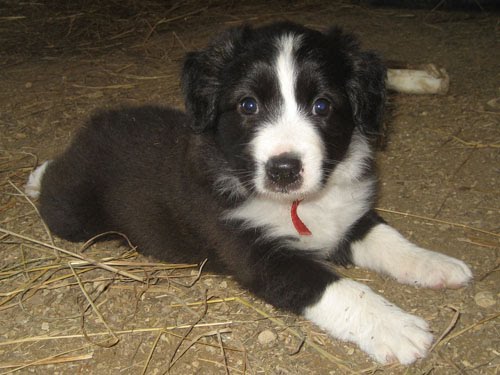
We are beginning to wean the Roseannadannas.

Force-weaning is unnecessary, and frankly a bit barbaric. Unless a bitch cannot nurse her pups -- mastitis is commonly the cause -- there's almost never a reason to pull them cold-turkey off her milk.* Mother will wean, and the gradual process is part of their physical development and education as social beings.

Rosie feeds her babies when she feels the need to now, not whenever she is with them and they are hungry. This means that she is starting to tell them no. Sometimes Hell No. She's got the clawed breasts and chewed nipples to justify it.

I was reflecting on the advice we trainers all give to owners -- the injunction to, above all else, be consistent.

But Rosie -- their first teacher -- is not at all consistent. Sometimes she will let them nurse, sometimes she won't. Sometimes she just exits stage left, sometimes she is quite forceful and scary in her nipple-denying tactics, even seeming to practice entrapment by not choosing to walk away when she easily could do so. Downright erratic.

Is Rosie then a bad mother? Or are dog mothers a bad template for teaching things to puppies and dogs? Shouldn't we throw out Nature's horribly flawed schematics and adopt the cold perfection of the Skinner box and the dolphin tank?

This begs the question, what is Rosie teaching her pups?

If the lesson was meant to be "You can't nurse anymore," then Rosie would be a mercurial tutor.

What if the lesson is something else?

Perhaps "You are no longer a helpless blind hamster; your needs will not be met before you are even aware of them, ever again. Deal with it."

Or, "You will ask before invading the personal space of a superior being."

Or, "Because I'm the Mommy, that's why."

Or even, "Don't let the door hit ya in the ass on your way to your new home." (Extended goodbye version.)

I think it is the pinpoint edge of the general principle that leads from infancy to full social adulthood: Love, she is conditional after all.

I think unconditional love ends for every mammal the day she bites Mommy's nipple hard enough to hurt. From that day on, we need to control our selfish impulse to atrocity in order to merit care and acceptance. This is a good thing.

So Mommy starts saying no, and we humans, who will (collectively) continue to nurture and guide long after her crucial job is completed, take over a little of her first role as food-givers and contingency-enforcers.

This will be the second litter I have weaned on raw meat, hand-fed. I found the conventional kibble-derived puppy-gruel to be unsatisfactory in several ways -- the mess (smelly, crusty puppies), the excessive competition among the pups, the repeated salvos of attacking yellowjackets, and the gawdawful diarrhea that my vet prescribed "special" food to correct.

I start them for the first few days on "satin balls" -- a rich firm mixture of ground beef (our dog beef has heart and liver in it), eggs, cereal, and some nifty supplements (recipe below). Puppies quickly discover that they love meat, and also that I am made of it. The hand-feeding is an opportunity for them to learn that I love them, but that this love does not extend to allowing them to feast on my living flesh. (For starters.) They don't learn to sit for a cookie or take a treat politely at four weeks of age -- they learn the groundwork for those and every other shred of good manners they will later acquire.


I mentioned posting the recipe for satin balls in the clip. This is the one I use, with a nutrient analysis. The Knox Joint Gelatin /Osteo Bi-Flex is harder to get than the TEN packets of gelatin in other versions of this recipe, but much cheaper.


Ingredient

Amount

Calories

Fat

Protein

Carbs

Calcium

Ground beef, 70% lean

10#

15060

1361 g

651 g

0

1089 mg

Total Cereal

Box (12 oz)

1134

6g

23g

261g

1134 mg

Oatmeal

Box (18 oz)

1914

38g

64g

344g

0

Wheat germ

Jar (12 oz)

1225

33g

79g

176g

133 mg

Olive oil (vegetable oil)

1 1/4 cup

2387

270g

0

0

3 mg

Unsulfured molasses

1 1/4 cup

602

0

0

147g

1872 mg

Raw Eggs

10 large

735

50g

63g

4g

265 mg

Knox Joint Gelatin

(Osteo bi-flex nutrajoint)

3 oz **

250

0

100

0

0

Flaxseed Oil

1/4 cup

482

55g

0

0

0

Salt

pinch

0

0

0

0

0

Total

15# mixed

23,789

1,813 g

980 g

932 g

4496 mg


Amounts per pound


1586

121 g

65 g

62 g

300 mg

Per one-ounce ball


99

8 g

4 g

4 g

19 mg


Whiz the cereal in the food processor or smash it up by stomping on the inner bag. I like the cereal to be very fine, and even food-process the dry oatmeal.


Mix all ingredients in a really big bowl. Get in there with your hands, a spoon will not do it. Add some more eggs or a little water if too stiff.

Roll into little balls and freeze, or freeze big clumps in ziploc bags.

Puts weight onto sick, starved, parasitized, and recovering dogs, and poor keepers. Good during times of stress -- such as nursing, hunting, SAR missions. Not for fat dogs!

-----------------------
* I have been reminded that it is common in certain breeds to take Momma away from her own offspring before she kills them. Literally. I consider this a flashing neon sign of rather vulgar proportions in the window of Nature's shop that says "DON'T MAKE MORE OF THESE."

** The analysis for the Osteo Bi-Flex Nutrajoint / Knox Joint Gelatin is not quite on -- when I did this analysis all I had was Knox plain gelatin, which is what you see in many satin balls recipes. This stuff has more calcium and less protein than plain gelatin. I had a hard time finding it, finally sent PC to a K-Mart in Ross that had it.

Sunday, April 17, 2011

Snapshot Sunday: Monolith


Spring or not, the asparagus is coming.

Sunday, January 30, 2011

Chili, Fulfilled

Are you ready for the secret ingredient?

Are you sure?

Okay. Use responsibly.

Posted by Picasa

Unsweetened. An ounce (one cube) or so per stockpot. This brand from the supermarket is okay, but we like the better-quality bulk stuff we can get at the co-op or specialty stores. Just toss it in when you add the tomato paste.

I have also used some unsweetened powdered cocoa that was so dark that no light could escape its surface, and that worked well. You want that wholesome bitterness to interact with the acid ingredients, meat and fats.

It adds richness, complexity, and authenticity to the chili. Chiles, beans and chocolate are traditional partners in Mayan cuisine.

Wednesday, January 19, 2011

Chili, Interrupted

Everyone who has tasted it wants to know how to make my chili.

Seriously. Everyone.

So here it is, almost, as you shall see.

You start the night before with a couple-three pounds of dried small red chili beans, or half and half the small red chili beans and pink beans.

Don't use kidney beans, and whatever you do, don't even try using canned beans. Dried small red chili beans, and/or pink beans. Most supermarkets have them in the section with Mexican foods if they aren't with all the other dried beans. I buy them at the East End Food Co-op or one of the stores in Pittsburgh's Strip that sell Mexican foods or bulk dry goods.

You rinse the dust off of 'em, pick out any little rocks. (How do the rocks get into the beans? Seriously, how? I never have this problem when I dry beans at home.) Then put them in a great big stockpot and soak overnight in cold water.


Before you go to bed, and before midnight, you get online, go to the Bissell MVP contest website, and vote for Cole.

Next day, pour out the soaking water, rinse the beans well, and refill the pot. Bring the pot to a boil and then simmer for maybe half an hour. Pour out the boiling water, rinse well again, add fresh water, and bring the beans back to a boil, then simmer.


When the beans are just done -- just about the texture that you want in your finished chili -- discard the second pot of boil water and rinse one last time.

Seriously -- two changes of water, both discarded, you won't regret it, because these beans will taste good and will not give you gas. They will not get any softer after you add the acid ingredients (tomatoes, tomato paste, wine).


Take a break, get online, and go vote for Cole, because you can vote once every day, and really, you ought to, oughtn't you?

While the beans are cooking, get out your biggest frying pan. Chop up three or four medium storage onions, chop or press about four or five big garlic cloves, and fry them up until the onions are wilted and a little bit brown.


I usually use peanut oil for frying, but this time I used lard. Yeah, lard. Because I serve the chili at parties and to guests a lot, and a fair number of people have peanut allergies. Nobody has a lard allergy. If you are making the veggie version, duh, don't use lard. Also, skip the next bit.

While the onions are frying, cut up about three pounds of beef or venison. This time I used chuck roast. Venison is better, but not everyone will eat it, so this batch is all beef. Cube the meat about the size of a die -- much smaller than for stew. (This is easier if the meat is partly frozen.)

Remove the puppy from your shoelace. Wash your hands. Use soap!


Put the onions aside. Brown the cubed meat.

Put the browned, cubed meat aside with the onions. Brown about three pounds of ground beef or venison.

Why, you ask, do you not brown the onions and all the meat together? Good question. Because I've got some big-ass frying pans, but none big enough to cook all that stuff in one go.

Throw the meat and onions in with the the rinsed, cooked beans. At this point I divide everything in half and start a second stock pot, because leftovers are everything with this chili, and there's no point making a small batch. Two big stockpots full make enough for a couple of dinners plus about five quarts of frozen or canned chili for later.

If you don't have two big stockpots, then just use half as much of everything.

Now add a quart or two of beef stock. (Use vegetable stock or miso if you are making the veggie version.) I use either homemade beef stock or this stuff,


which is not cheap hydrolyzed fake stuff, but real concentrated beef stock. For this batch I used some of each because I used up the last of the homemade.

Step carefully around the obstruction that limits access to both sink and stove.


Put the pot with the beans and stock back on the flame (low heat) and start throwing in the rest of the stuff --

Coupla big cans of tomatoes (crushed, chopped, whole -- doesn't matter)
Coupla small cans of tomato paste

Stop and observe the adorableness.


Get those pots up to a firm simmer.

Add the mystery ingredient.

The very important secret ingredient that makes it all hang together.

The one you just don't expect.

And I'm not going to tell you.

Unless Cole makes the finals in the damned vacuum cleaner contest. If he makes the finals and advances to possibly win big bucks for National English Shepherd Rescue, then I will come back and revise this post and reveal the secret ingredient.

So if you want to know, you will not only vote for Cole yourself, you will mail-bomb everyone you know, tweet, facebook harass, and blog to get them to vote for Cole so that your chili will also have that mysterious and authentic richness and body.

Cook this for a while, maybe a half-hour, hour. Stir from time to time. Remove food critic from field of play.


Wash hands. Use soap.

Now add about half a bottle of red wine or a bottle or two of dark beer. Either is good. Use more if the chili is a bit dry. If you run out of wine or beer, add more stock as needed. And start adding the spices:

Throw in the chili powder, cayenne, black pepper, white pepper (I was out of it this time), red pepper flakes, and cumin. Amounts up to you. Each pot gets at least a tablespoon of chili powder, lesser amounts of the other spices.


If you are making the veggie version, this is the time to add a cup or two of textured vegetable protein (TVP). Yeah, it sounds godawful. It isn't. It is a passable imitation of ground beef, texture-wise. Devoted meat-eaters like my vegetarian chili, and some vegetarians think I am trying to trick them. Don't overdo the TVP -- it really blows up when it gets wet.

My chili comes out moderately hot. I don't salt until about ten minutes before serving. Hot sauce is available at the table for those who want a hotter chili.

Serve with cornbread or stoned wheat crackers and any good beer.


Let the leftovers mellow in the pot in the fridge overnight. The next morning, get up, vote for Cole, and then portion it out into quart-sized containers. This chili freezes well. I will can it in a pressure-canner to save freezer space. Freezing is easier.

Thursday, December 16, 2010

Food/Feed Part One: Nitrogen is Nitrogen


The students at Sheep School (aka classes offered in conjunction with the Maryland Sheep and Wool Festival) were a mixed lot: a few experienced small commercial stockmen and women, hobby farmers, hand-spinners, pet herders, stockdog handlers, and farmers new to sheep. And me, the stock farmer wannabe; closing on our farm was still a week away.

The instructor for our integrated pest management class was a bit ADHD and very widely knowledgeable, so the course strayed a bit from the closely-defined curriculum. At times, quite a bit. We spent a good deal of time discussing general nutrition. How to balance a ration, how much protein was necessary, working with the feed mill for custom mixes, computing supplements for animals on pasture. And making use of "waste." One student fed bakery discards to his flock. Another was exploring a deal with the produce manager of a supermarket. Good economy if one could ensure that the animals got proper nourishment, if their "ration" was "balanced" overall.

Then the skeptical question, from one of the more experienced students: What about this thing he had read about, feeding poultry litter to sheep?

Whaaa?

For those of you whose brains are reflexively vomiting back what you just read (and good for those brains, that is the right reflex), I'm afraid, yes, he was referring to feeding chicken shit, feathers, and soiled sawdust (corncobs, peanut hulls, shredded paper, whatever) to sheep. To animals that evolved to eat God's grass. To animals that are eaten by humans. Whose milk is consumed by humans.

Most of us in the class had to have this clarified and explained too. Not because we were thick.

It's worse than just that, though. What is the source of "poultry litter" to be added to the silage for sheep, goats, cattle? Not the smallholder's wholesome happy henhouse, but, of course, the industrial broiler factories, "vertically integrated" McNugget mechanisms where hundreds of thousands of freakish hybrid birds are crammed together for the short duration of their lives, scarfing down pellets laced with subclinical antibiotics, growing at an astonishing rate, and shitting prodigiously.

The instructor's official response came straight from the playbook of industrial agribusiness: Well, nitrogen is nitrogen.

Translation, long form: As long as an animal receives known chemical nutrients in the right amounts and relative proportions, as determined by science, it doesn't matter what foods it eats.

"Food" is presented as a quaint vehicle for delivering chemical nutrients. No, not "food." "Feed." If livestock eat it, it is not even dignified as "food."

A joke: April Fool's broadcast of NPR's All Things Considered in the early 90's. The well-crafted spoof spotlights the growing practice among organic gardeners of skipping the middleman and eating delicious, rich, nutritious finished compost.

Okay, cute. Funny part was listener reaction the next day. There were the clueless who never got it, and earnestly wrote and called in to solemnly warn about the dangers of pathogens in compost. And the pinched and humorless, who upbraided the wicked reporters for their irresponsibility, invoking the legions of listeners led astray, and out to the corner of the garden with a spoon.

Little did they know.

Sitting in that tent in Maryland, I remembered the previous year's pet food recalls. Are nutrients packaged and marketed for dogs and cats "food" or "feed?" On the bag it says "food." The pet-owning consumer likes to think of it as food, no scare quotes. The industry periodically drops into referring to it as feed, same as the pellets and crumbles and grain mixes sold for poultry, cattle, horses.

Dog and cat food, or feed, was systematically killing beloved pets because, somewhere at a factory in China, someone had discovered that a cheap industrial plastic could be added to agricultural commodities to make them appear to be higher in protein. It was cheaper to add waste plastic (impure "melamine scrap") to grain products so that when these products were tested for "crude protein," they would appear to be more valuable than they were.

What does the simple, cheap "crude protein" test detect? Not protein, but nitrogen -- an element that is lacking in lipids and carbohydrates, but abundantly present in the amino acids that form proteins.

Logical enough. If nitrogen is part of a food, it is tied up in the protein. Measure nitrogen, you measure protein. Why would one expect anything else?

But that's not quite true of "feed." Ruminant animals -- cows, sheep, goats, camels, deer, etc. -- can, to some extent, utilize free nitrogen as nourishment. The microbial symbionts in their reticulorumens (first two "stomachs") are able to convert non-amino acid nitrogen to both microbial amino acids and -- if an excess is present --ammonia, used as an energy source. The animal does not digest this free nitrogen (as well as undigestible cellulose) itself -- the animal digests the microbes that have eaten these uneatable feeds. And their poop.

Feedlots have been adding urea to the already unnatural rations of cattle for decades. Since the feedlot steer is not meant to live to adulthood, what does it matter that his kidneys are being destroyed? The captive-bolt will beat fatal organ breakdown by a few months. There isn't even the conceit of optimizing steer nutrition for health and well-being. Cheapest way per pound to cover bone with meat over the course of the next few months.

Monogastric animals -- dogs, cats, chickens, horses, almost everyone, including us -- don't carry around a belly-load of symbionts ready to digest these particular undigestibles for us. Nitrogen that isn't chained into an amino acid is useless to our innards.

So that's the basic biochemistry -- the reason the ag-school expert was willing to pronounce that "nitrogen is nitrogen," even when faced with a practice that, from her paralanguage, evoked the same disgust in her as it did in the rest of us. Official line: Industrial chicken-shit and prime alfalfa -- same diff to a sheep's symbionts. Do the math. Use what's cheap.

A notion that has grown rather more legs than are justified by sciences and disciplines beyond the basic biochemistry involved in a nutrient analysis.

Does it make sense from the standpoint of evolutionary biology?

Well, there are animals that consume the feces of other animals for nourishment. They are called scavengers. If you've kept an aquarium, you've likely employed catfish or snails in this capacity. Sheep are not among them. Sheep have evolved to to eat grass.

The will to ignore the observed facts of biology comes from the conceit that, because we understand more about the chemistry of nutrition today than we did a hundred years ago, we know everything about it.

Does it compute from a public health perspective?

Factory broilers consume sub-clinical doses of antibiotics from the day they hatch to the day before they are slaughtered.

Does your lamb chop need to consume megadoses of not only the antibiotic residue in the chicken shit, but the mutant coliform bacteria themselves?

Does it pass the sniff test of food safety?

The melamine in US infant formula wasn't dumped into the milk powder from a vat. It was concentrated in the kidneys of cows fed contaminated "feed."

The contention that "nitrogen is nitrogen" -- could that be the underlying industriagra conceit that gave us Mad Cow/scrapie/Creuzfeldt-Jacob? That poisoned dogs and cats who were eating a "balanced" and "scientific" ration? That has destroyed the kidneys of uncounted Chinese infants? That has American cows' milk testing positive for the same a fossil-fuel-based contamination that "couldn't happen here?"

Has this conceit clambered up the food chain to become "fat is fat" -- which has given us industrially-altered trans-fats and their attendant heart disease -- or that "sugar is sugar" -- whereby chemically mutated high-fructose corn syrup replaces cane sugar?


Are eaters -- and feeders of eaters -- falling prey to a sad shadow of physics envy -- and regarding as "sciencey" the neatly quantified pronouncements of industrial nutrient peddlers? I see an agribusiness creep -- from livestock "feed" through pet "feed/food" to ConAgra's interpretation of "food" for humans

The goal of the feed seller is to get away with the maximum markup between raw material cost and the feed bag on the shelf at Agway. Some can spin chicken shit into gold.

The goal of the commodity farmer is to get the maximum production for the least cost. A broiler chicken's lifespan is eight weeks; a lamb's, eight months; a steer's, eighteen months. No one is worrying about cancer or blindness or kidney failure striking down Ferdinand in middle age.

Pet owners were surprised in 2007, when we found out that the feed sellers did not ethically distinguish between beloved pets and working dogs and future lamb chops.

Monday, October 11, 2010

Macro Monday: Caging Summer


The tart, popping flavor of the currant tomatoes will be locked up by the food dryer and olive oil.

August days in a jar.

Saturday, August 28, 2010

Call for Recipes

Homeless baby Briar says she is hungry. You can help!


You say you want my marinara recipe?

The one that I spend September cooking up and canning, imprisoning the tangy essence of summer in glass jars of goodness that nourish us two or three times a week all year?

The recipe that is so fantastic that my Sicilian husband uses it as a base for almost all his Italian cooking -- tomatoes grown and transformed by his Irish wife? (There has got to be a word for shiksa in Italian.)

Well I'm not going to give it to you.

But you can get it.

Heads up, I'm sending it in to the National English Shepherd Rescue cookbook project. NESR will start taking orders for this communal cookery tome at the end of September.

Meanwhile, you can help homeless English shepherds by contributing your favorite recipes to the cookbook. Our peerless editor, Dianne, writes:

National English Shepherd Rescue is an all-volunteer, non-profit breed rescue group working to place English shepherds in need of new homes. We are currently collecting recipes for our second edition cookbook. We're looking for everything from appetizers, soups and salads, to main dishes, side dishes, desserts, canning and preserves, crockpot ideas, and special treats for dogs. Basically, if your family likes it, we want it! Please include your name, city, state/province/country, and the name(s) of your dog(s) so that we can give you proper credit for your submission.

We've already started work on the layout, so please don't wait until the September 30 deadline to send your recipes in! Submissions should be emailed to:
cookbook@corbia.com. (We will begin taking pre-orders at the end of September!) For more information about NESR, please visit our website: www.nesr.info


I know there are some talented cooks and some keepers of old family recipes reading here. Pass the torch and help some deserving dogs in need! There is no limit to the number of recipes you can send.

I'll also be providing my recipes for chocolate chili, hot pepper jelly, Lilly's Choice dog biscuits, Dijon vinaigrette, coq a vin, and perhaps a few more as they occur to me.

Dianne told me about a simple cheese-based dessert that caused me to invoke several deities in vain when she merely described it. Wouldn't you just like to know? I swear, bring this thing to a holiday party, and people will gnaw their way through Santa Claus to get at it. It will be in the book, but I won't tell you anything more. You just have to buy it.

And if anyone has a recipe for really crispy dill pickles, there is an entire collective of English shepherd-owning wimmin who will bow down before you.